





















Crypto payments have promised everyday usefulness for years, yet adoption stayed slow. Now, OKX believes the moment has arrived. The platform finally jumped on the increasingly competitive crypto card bandwagon and launched OKX Pay and the OKX Card in Europe, positioning the product as the first compliant DeFi payment and card solution built specifically for the European Union.
Key facts:
- OKX Card now available throughout Europe.
- Virtual Mastercard, no physical edition yet.
- USDC and USDG top-ups, 0.4% currency conversion fee, no other fees or costs.
- Requires using mobile app; Apple and Google Pay compatible.
OKX Pay and OKX Card Go Live
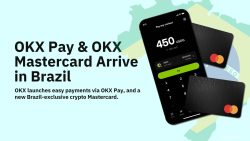
Back in November 2025, OKX launched its Mastercard, but only in Brazil. EU launch was only a matter of time, and the platform now delivered.
Today, OKX introduced OKX Pay and the OKX Card through its regulated European entity, operating under MiCA rules and Mastercard infrastructure. The launch allows you to deposit euros, convert them into supported fiat-backed stablecoins, and spend them directly on daily expenses such as food, transport, subscriptions, and online shopping.
The OKX Card functions as a euro-denominated virtual debit card connected to OKX Pay. At checkout, stablecoins convert to euros in real time, while merchants receive a standard Mastercard payment. From their perspective, nothing changes. For you, crypto becomes spendable without friction.
Stablecoins Power Faster and Cheaper Payments
OKX built the product around stablecoins because they solve problems traditional payments still struggle with. Stablecoins settle around the clock, avoid banking cut-off times, and reduce cross-border complexity within Europe. For people who travel frequently or manage income across countries, this structure removes delays and hidden fees.
Instead of paying with volatile assets, OKX Pay focuses on stablecoins such as USDC and USDG. Spending feels closer to using cash, without the stress of price swings at the register. This design choice directly targets one of the biggest barriers to crypto payments.
How OKX Card Works in Practice
You can start by opening the OKX App, requesting the OKX Card, and activating it in-app. Once active, you transfer supported stablecoins into your OKX Pay balance. There are no manual conversions, advance top-ups, or separate payment apps involved.
When you make a purchase, the card converts stablecoins to euros instantly. A 0.4% market spread applies during conversion, but OKX does not charge transaction fees or foreign exchange fees. The card works online and in-store anywhere Mastercard is accepted and can be added to Apple Pay or Google Pay for contactless payments.
Up to 20 Percent Cashback Rewards Early Adopters
To encourage early adoption, OKX introduced a launch promotion offering up to 20 percent crypto cashback during the first month. Rewards pay out instantly and do not require staking or lock-ups. Cashback currently applies to purchases funded with USDG and is subject to caps and eligibility rules.
While these rewards are promotional rather than permanent, they add real value for those testing the card for everyday spending. For frequent card users, the cashback can quickly offset conversion costs.
OKX Card vs Bybit, BitMart & Others
The OKX Card enters a competitive field. Our crypto bank cards page now tracks well over a dozen exchanges, and each of their cards has their pros and cons.
1. Bybit Card
Bybit Card already supports crypto spending in multiple regions and offers cashback promotions, often capped at lower percentages but spread across broader asset support. Bybit focuses heavily on lifestyle rewards and integrates closely with its exchange ecosystem. Fees are slightly higher than some competitors, but user experience is top-notch.

Bybit Card users reach 1 million in just one year. To celebrate, you can take advantage of promotional events and share from a $100,000 prize pool.Read Now
2. BitMart Card
BitMart Card, meanwhile, emphasizes accessibility and global spending, though it typically relies on more traditional custodial structures. Fees and reward structures vary by region, and cashback rates tend to be more modest. For most purchases you can expect 1% cashback, but near global availability and multiple card editions (including physical) are huge upsides.
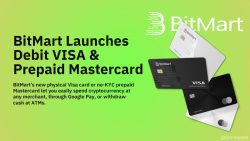
BitMart now offers a full suite of crypto cards, including Visa and prepaid Mastercard options for global users. From instant virtual cards without KYC to VIP Metal perks, you can spend crypto worldwide with flexibility and rewards.Read Now
3. WhiteBIT Card
WhiteBIT’s Nova card is another standout performer in the EU, with both physical and virtual editions and up to 10% cashback on everyday spending. Best part is that it basically has zero fees and supports dozens of different crypto assets for spending. Biggest downside is Nova’s EU-only region lock, so customers from other countries are unable to use it.

This is what is all comes down to: using your Dogecoin to buy coffee! WhiteBIT introduces WhiteBIT Nova, a crypto debit Visa card for seamless spending of your crypto. Zero fees and up to 10% cashback, available in both virtual and physical editions.Read Now
4. CoinW Card
CoinW exchange may often be neglected by crypto traders, but the Card definitely shouldn’t be. The CoinW Card is issued in Singapore and available almost globally, including Europe. Low fees, mobile-app friendly and physical edition availability are its other major upsides.

CoinW just upgraded their virtual card Visa to a physical one. Issued by a Singaporean bank, CoinW card is available globally with low fees and no renewal costs.Read Now
Other commonly used cards include those by Crypto.com, Gate, Gemini, and Kraken, but there are many more.
OKX stands out by tying payments directly to a smart wallet model, maintaining asset control until the moment of transaction, and offering zero platform fees with transparent conversion spreads. Its MiCA licensing also positions it strongly within Europe’s regulatory environment.
OKX Card’s biggest downside (at least for the moment) is availability, as only EU customers can apply for one. In addition, only USD stablecoins are available for spending, although we expect that will expand soon.
Europe Becomes the Test Case for Crypto Payments
Europe’s regulatory clarity makes it an ideal proving ground. MiCAMarkets in Crypto Assets regulation, legal framework for crypto regulation in entire European Union sets clear rules for consumer protection, custody, and compliance, which allows products like OKX Card to scale responsibly. Instead of bypassing regulation, OKX built directly within it.
This approach mirrors broader industry trends. Stablecoins already play a growing role in remittances, treasury management, and settlement. Extending them into consumer payments represents the next logical step.
How to Get Started With OKX Card
You can activate the OKX Card by opening the OKX App, requesting the card, and funding your OKX Pay account with supported stablecoins. Once activated, the card works immediately, both online and in-store. Optional wallet integrations make mobile payments seamless.

With zero transaction fees, real-world usability, and strong launch rewards, OKX is betting that compliant stablecoin payments can finally break into daily life. For anyone looking to spend crypto as easily as cash, the OKX Card marks a meaningful step forward.